洞察
文章2023年12月8日1 分钟阅读

集体投资计划投资教育系列 (第二部分)

集体投资计划投资教育系列 (第二部分)

为什么要投资及投资多元化的重要性
与传统投资组合相比,跨不同资产类别的 投资多元化 可以有效降低风险。随着柬埔寨证券交易监管机构近期批准 首个集体投资计划基金的推出,柬埔寨投资者现在有机会进一步保护其投资组合。

集体投资计划现在允许投资者将资产分散到 更多合法的跨国投资产品中,从而降低整体投资风险。

此外,投资活动仅通过 获得柬埔寨证券交易监管机构批准的基金经理进行,为投资者提供了额外的保障。目前,柬埔寨证券交易监管机构批准的首只集体投资计划基金为富亚亚洲股票基金,由富亚资产管理 (柬埔寨) 有限公司管理。

投资多元化并非新概念,它已被全球金融领袖广泛推广和推荐。正如世界第六大富豪、著名投资人 沃伦·巴菲特 (Warren Buffett) 所言:“永远不要依赖单一收入来源,通过投资创造第二收入来源。”

投资有多种好处,其中最主要的是 财富增值,帮助投资者实现财务独立。对于柬埔寨人来说,这意味着不必过度担忧自身财务状况,同时还能作为 额外收入来源,补充日常收入。

更重要的是,投资可以 抵御通货膨胀,在物价上涨时保持购买力,从而增加财务自由度。投资带来的财富增长效果可参考下图 (图 1)。

invest

投资者自然期望随着投资的持续,资产能够长期增值。然而,必须注意的是 所有投资均存在一定风险。通常收益越高,风险也越大。通过 分散投资至受监管的金融产品,可有效降低这些风险。

目前,柬埔寨投资者主要通过两种方式积累财富:银行定期存款 和 土地相关投资。根据 CEIC 数据,2023 年 8 月,柬埔寨银行存款总额创历史新高,达到 409 亿美元,较一年前的 370 亿美元 增长显著。

❖ 其他类型的投资

Screenshot 2024-09-26 at 15.42.18.png

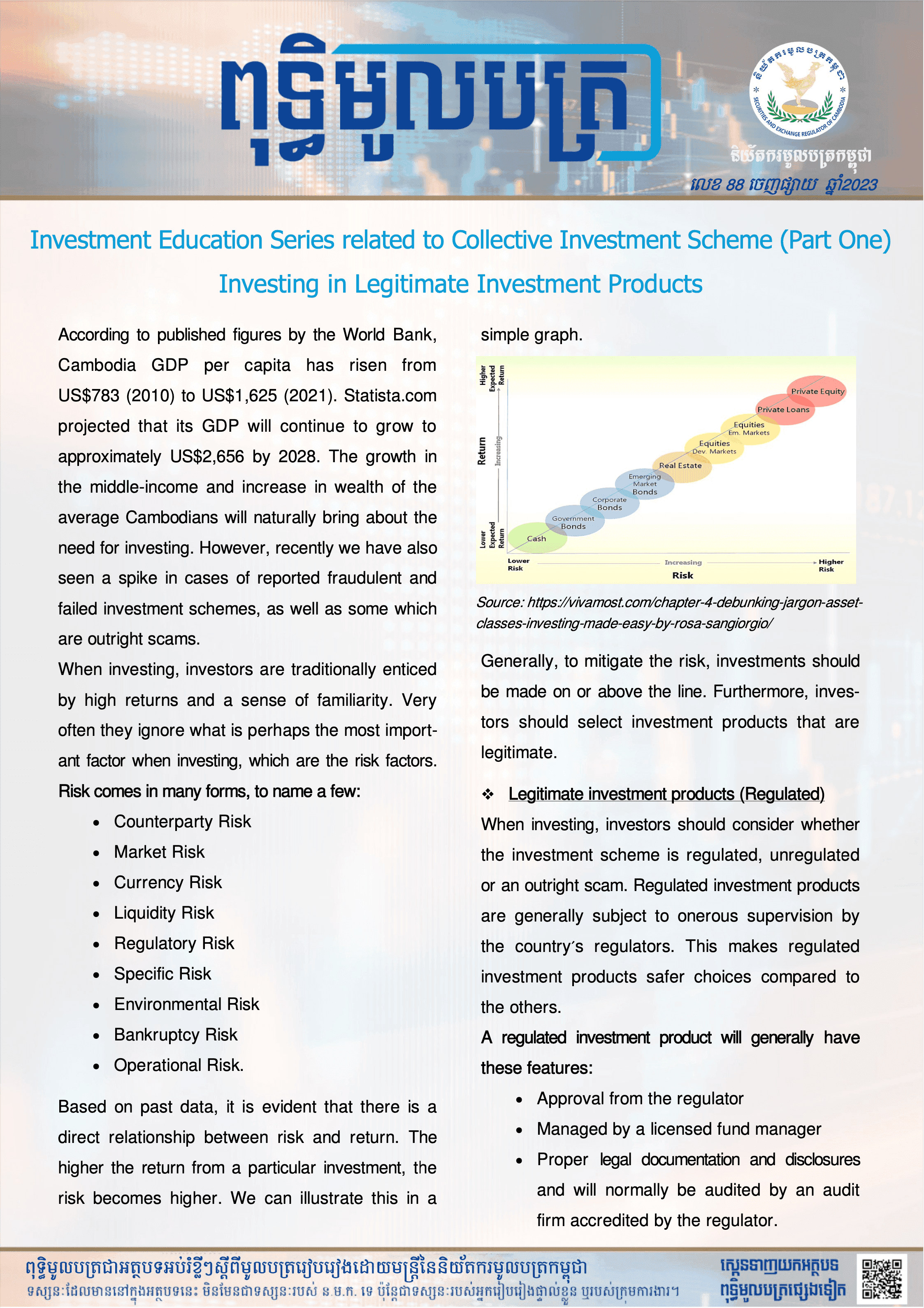
投资者可选择的投资类型非常多样,从 低风险投资 (如银行存款、投资级债券) 到 高风险投资 (如私募债、私募股权),在极端情况下,投资者可能会失去全部投入的资本。

❖ 投资多元化
投资多元化是指将资金分散投资于 不同资产类别(银行存款、股票、债券、房地产等)、不同国家 (如香港/中国、美国、日本、新加坡、泰国等) 以及 不同行业板块 (银行、消费、科技、地产等)。其主要目标是分散风险,使某项投资出现损失时,不会对整体投资组合造成重大影响。投资多元化能够显著降低整体风险。

以股票类集体投资计划基金为例,投资股票的风险可通过多元化来降低。这通常通过构建一个 股票组合 (Portfolio) 实现,例如投资 30 只不同的股票。多元化带来的好处不仅来自于增加投资股票的数量,还包括跨 不同国家 和 不同行业板块 的投资,例如银行、地产、消费、通讯、科技等。通过增加基金持有的股票数量,投资组合的风险可以大幅降低。

下图 (图 3) 展示了随着投资股票数量增加,风险的降低效果:

Screenshot 2024-09-26 at 15.45.24.png

需要注意的是,随着投资组合中股票数量的增加,风险降低会逐渐趋于极限。剩余风险被称为 市场风险 (如图 3 中的 * 标示),这是无法通过多元化消除的。例如,发生大规模战争或全球性疫情(超过新冠肺炎 (COVID-19) 的规模) 时,投资者仍会面临市场风险。

❖ 投资多元化的实际挑战

对于个人投资者而言,实现投资多元化可能存在一些困难:

  1. 投资金额过小,难以分散到不同资产类别或购买足够数量的股票;
  2. 交易成本较高,可能影响整体投资回报;
  3. 投资者缺乏时间或专业知识来跟踪不同投资,可能导致不采取行动;
  4. 投资纪律不足,难以持续维持投资策略。

因此,柬埔寨投资者通常也应将资产分散到更多 合法投资 中。合理的多元化策略可包括部分投资于 定期存款、土地类投资 以及 集体投资计划基金。

❖ 集体投资计划基金 (CIS)

集体投资计划基金将来自不同投资者的资金汇集起来进行统一投资,每位投资者仍保有其基金单位的所有权与控制权。基金再将资金投资于 股票、债券、房地产 等资产。

以股票类集体投资计划基金为例,由柬埔寨证券交易监管机构授权的专业基金经理 负责具体投资操作。投资者可自主选择投资或退出时机。不同基金具有不同的投资策略和目标,可满足不同风险偏好的投资者需求。集体投资计划基金为投资者提供了一种 便捷实现投资及投资多元化目标的途径。

集体投资计划基金的优势包括:

  • 专业管理:由柬埔寨证券交易监管机构授权的基金经理管理,并经柬埔寨证券交易监管机构审批可向公众销售;
  • 投资多元化:部分基金投资于 跨国、多行业的股票组合,有效分散风险;
  • 低门槛投资:初始投资金额可低至 500 美元,即可持有约 30 只股票的基金单位;
  • 流动性与透明度:投资者可每日买卖基金单位,基金净值每日在当地媒体公开披露。

❖ 投资原则

投资应在 合理回报与可控风险 的前提下进行。个人投资者应选择 受柬埔寨证券交易监管机构监管、由柬埔寨证券交易监管机构 授权基金经理管理的金融产品。投资基金单位前,投资者需先向柬埔寨证券交易监管机构申请投资者身份识别号。投资者应通过多元化策略 降低投资风险。集体投资计划基金不仅提供便捷投资途径,还带来多元化等其他投资收益。
本文资料来源 Securities & Exchange Regulator of Cambodia (SERC)

分享

更多洞察

Banjaran AMC Conducts Second CIS Training Session for NSSF Officers and Staff
活动2026年11月6日

Banjaran AMC Conducts Second CIS Training Session for NSSF Officers and Staff

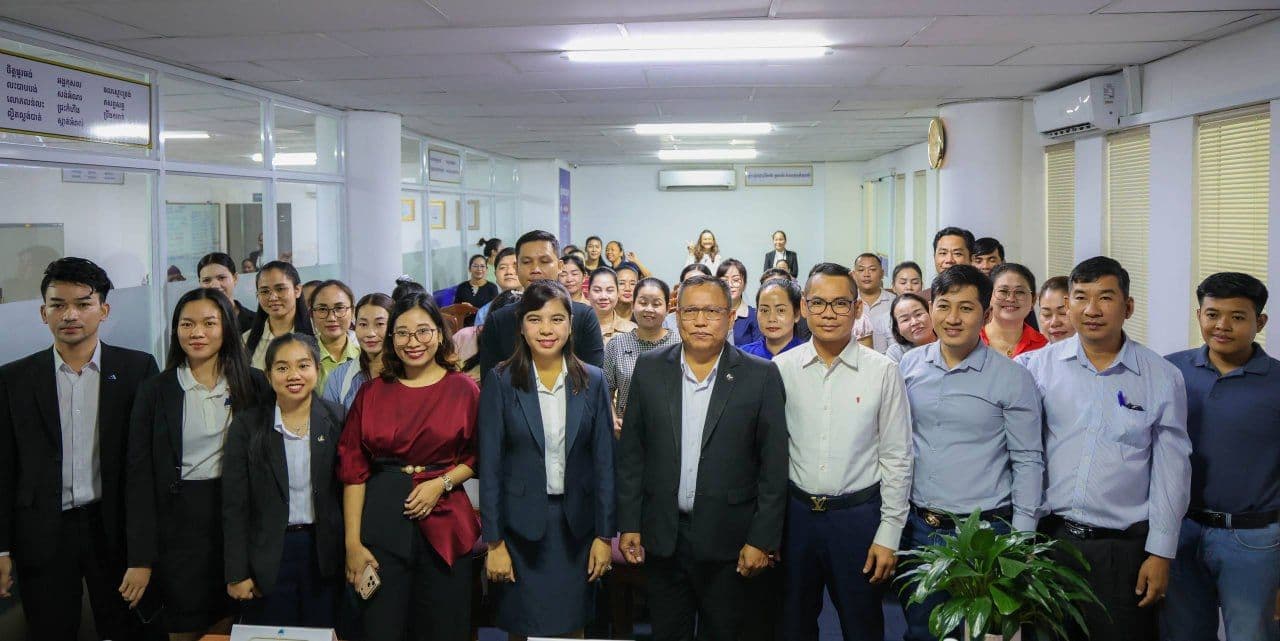
On the afternoon of 6 November 2026, under the direction of the management of Banjaran Asset Management (Cambodia) Plc., Mr. Nhem Sopaul, Head of Corporate Affairs, led a team from the Company in conducting the second training session on “Collective Investment Schemes (CIS)” for the officers and staff of the National Social Security Fund (NSSF) on 6 November 2026. During the training session, Mr. Sok Chantola, Sales & Marketing Deputy Manager; Mr. Taing Hoy, Internal Audit Senior Executive; and Mr. Veasna Monireach, Operation Senior Executive, delivered presentations on “Introduction to Banjaran AMC & CIS Landscape”, “BAMC Asia Equity Fund (BAEF)”, and “Investment Strategy & Key Value of Banjaran AMC”. The presentations provided participants with a better understanding of collective investment schemes, the Fund's investment approach, and the key values of Banjaran AMC. The training was organized to enhance participants' understanding of CIS, introduce the investment opportunities offered through BAEF, and raise awareness of investment funds and the development of Cambodia's capital market. Banjaran Asset Management (Cambodia) Plc. remains committed to promoting financial literacy, sharing investment knowledge, and contributing to the development of Cambodia's capital market through educational initiatives and knowledge-sharing activities.

1 分钟阅读阅读更多
2026 October Market Outlook: Asia Markets – AI Valuation Concerns and Rising Geopolitical Risks
Market Outlook2026年11月2日

2026 October Market Outlook: Asia Markets – AI Valuation Concerns and Rising Geopolitical Risks

The direction of US monetary policy remains a key source of uncertainty. Minutes from the September Federal Open Market Committee (“FOMC”) meeting indicated that a further rate increase before year-end remains possible. However, Chair Warsh has declined to commit to a path, identifying the October and December meetings as the key decision points. Ahead of the next FOMC meeting on 27–28 October, the International Monetary Fund has cautioned that uncertainty over US monetary policy could keep Asian financial markets volatile. The recent sell-off has also brought the financing of AI investment into sharper focus. Chair Warsh noted that large technology companies raising funds in the bond market are adding to competition for capital. In our view, investors are likely to place greater scrutiny on the returns these companies generate from their AI spending. Developments in the Middle East remain a key swing factor for oil prices and inflation. Before the conflict began in late February, the Strait of Hormuz carried around one-fifth of global oil supply. Within Asia, the most significant development has been in Indonesia. On 15 October, index provider MSCI Inc. launched a consultation on reclassifying Indonesia from Emerging Market to Standalone Market status, citing insufficient progress on market transparency, concentrated shareholdings and weak enforcement. This contrasts with FTSE Russell, which reaffirmed Indonesia’s emerging market status. The Jakarta Composite Index fell 8.0% following the announcement, which triggered a trading halt. MSCI has also frozen certain index changes for Indonesian securities, including new additions, until further notice. The announcement adds to a difficult year for Indonesia, whose stock market has fallen more than 30% to become the world’s worst performing this year, according to Bloomberg, while Moody’s and Fitch have both revised the sovereign rating outlook to negative. With the consultation open until 30 April 2027, analysts expect foreign outflows to continue. In North Asia, the October sell-off highlighted how exposed South Korea and Taiwan have become to swings in AI sentiment after very strong gains over the past year. The KOSPI and TAIEX rose 86.7% and 80.6% respectively over the past year, and the TAIEX’s price-to-earnings ratio has expanded to 27.9 times from 23.1 times. Singapore again demonstrated its defensive qualities, with the Straits Times Index declining only 0.5% on 15 October, a far smaller fall than its North Asian peers. Overall, investor sentiment has shifted from chasing AI momentum towards greater caution on valuations, funding costs, and geopolitical risk. In this environment, we remain focused on businesses with strong balance sheets, sustainable earnings and pricing power, which we believe are better positioned to navigate persistent inflation and energy price shocks. We continue to apply a disciplined, bottom-up approach to stock selection and to maintain diversification across geographies and themes.

3 分钟阅读阅读更多
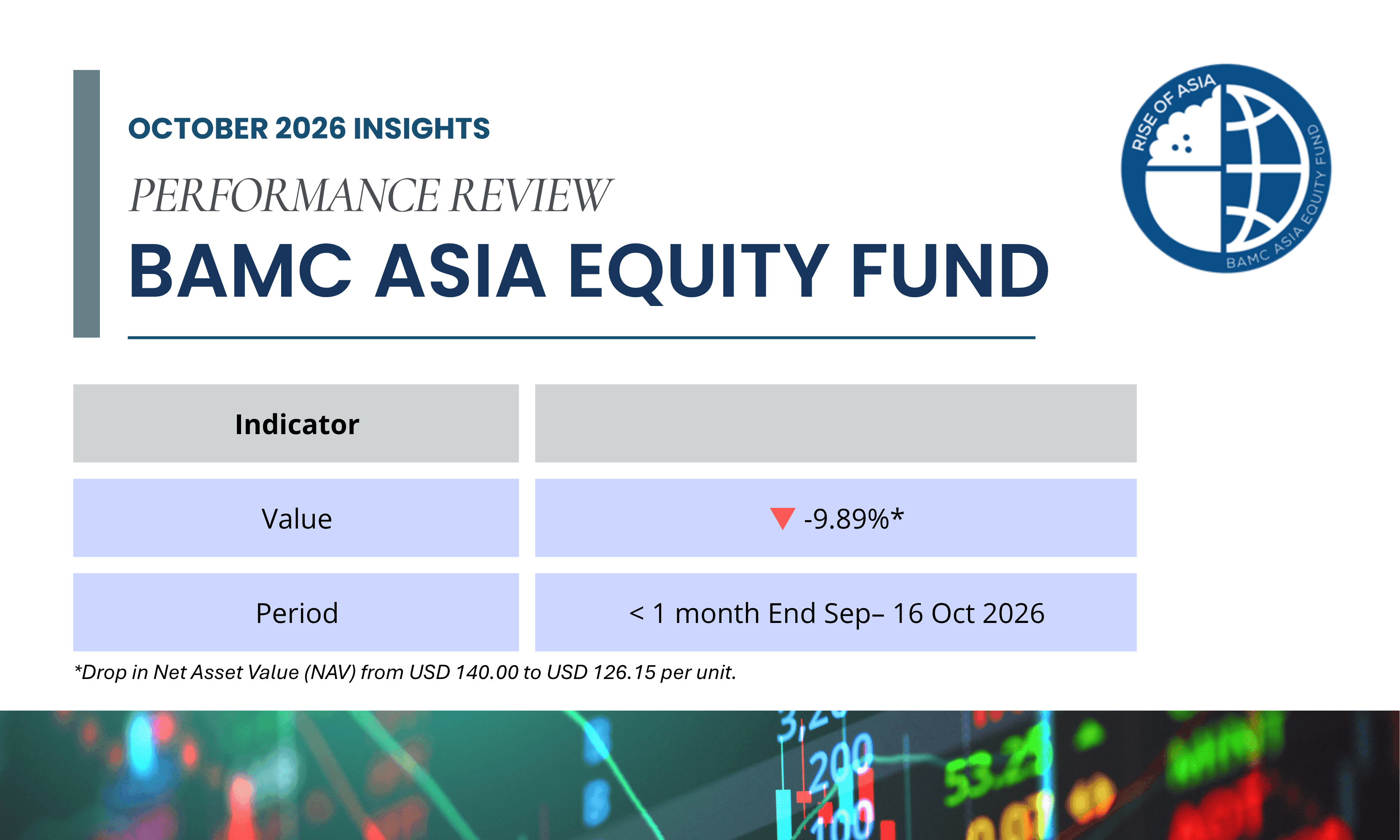
BAMC Asia Equity Fund (BAEF) Performance as of 16 October 2026
公告2026年10月23日

BAMC Asia Equity Fund (BAEF) Performance as of 16 October 2026

Markets in October Since end September, global equities have faced pressure from higher borrowing costs and growing scrutiny of the returns from AI related spending. Stronger than expected US inflation reinforced expectations of further Federal Reserve tightening, weighing particularly on technology and semiconductor valuations. Elevated oil prices added further pressure on inflation concerns. Overall, technology-heavy Asian markets bore a greater share of the selling in October’s global tech weakness. Our exposure to Asian equities reflects our focus on the region’s long-term growth opportunities. Short-term volatility is an inherent risk of this approach, but our investment decisions remain anchored in companies’ fundamentals and their potential to generate sustainable returns over time. Portfolio underperformance Against this backdrop, BAEF’s main drag was its concentration in Korean and Taiwanese equities and semiconductor related holdings, which together accounted for 32.3% of the portfolio and approximately 4% of the calculated drag. The Korea ETF and Samsung alone contributed roughly 2%. Korea was particularly affected by the unwinding of AI-related positions. On 15 October, its benchmark equity index fell approximately 8%. Samsung’s weakness came despite guidance for a substantial increase in third-quarter operating profit, suggesting that concerns over valuations, financing conditions and competition outweighed the near-term earnings improvement. The drop was compounded by sharp falls in several Singapore small caps and financials. Addvalue fell 22.9%, UOB Kay-Hian 25.2%, OCBC 10.3%. OCBC faced a specific catalyst when Citi downgraded the stock from “neutral” to “sell”, citing risks to third-quarter earnings, pressure on net interest margins from higher deposit costs, and the potential normalisation of exceptionally strong first-half wealth-related income. Addvalue’s share price weakness is due to profit-taking after a strong run. Singapore’s semiconductor-related suppliers to chipmakers fell harder than the larger chipmakers; Frencken fell 14.9%, UMS 14.8% and AEM 9.9%. Together, these holdings constituted approximately 14% of the portfolio and implied another 2.3% of drag. Like the global technology sell-off, broader concerns over the AI investment cycle were weighing on sentiment beyond individual companies’ reported performance. There were few meaningful offsets in the portfolio as gains elsewhere were insufficient to counter the losses. Why we still hold these stocks Despite the recent weakness, we retain these holdings because the underlying earnings drivers remain relevant to our investment horizon. The sell-off has weakened share prices more than the underlying medium- to long-term investment case. In semiconductors, the correction has coincided with continued growth in demand for AI compute. TSMC’s latest results and guidance pointed to sustained demand for advanced chips, while Samsung’s earnings guidance reflected stronger memory sales and pricing. These developments support maintaining exposure to the sector, although we recognise that strong operating performance does not eliminate valuation risk or the possibility of further share price volatility. Our Singapore semiconductor holdings provide exposure to different parts of this investment cycle. UMS benefits from equipment demand and increasing exposure to advanced packaging, AEM offers participation in increasingly complex semiconductor testing, and Frencken provides a more diversified manufacturing exposure. The rationale for retaining these positions rests on their prospective earnings as customers invest in additional capacity and advanced chip architectures, rather than an expectation that all semiconductor-related stocks will recover together. For the financial holdings, recent operating results provide a basis for distinguishing share price weakness from deterioration in the businesses. OCBC’s wealth-management and other non-interest income have helped offset pressure on lending margins, while its capital position continues to support business growth and distributions. UOB Kay Hian reported substantially higher first-half earnings, supported by stronger trading activity, commission income and interest income. We retain exposure to these earnings streams, while recognising that wealth related revenue and brokerage activity are market sensitive and that recent growth rates may not persist. We retain exposure to Addvalue to the long-term growth in satellite connectivity and space infrastructure. Recent share-price weakness appears to reflect, in part, profit-taking following a strong rally, while continued orders support the underlying growth outlook. In september, Addvalue announced US$15 million of new orders across its space connectivity and advanced digital radio business, bringing its order book to US$20.2 million. Converting these orders into earnings and cash flow remains central to our investment case. Overall, we remain selective and view the decline as a potential opportunity to top up positions rather as a reason to hold every position unchanged. Continued ownership must be supported by company fundamentals, an acceptable valuation, and grounded in earnings growth. Moving forward Looking ahead, we intend to increase exposure to quality large-cap and blue-chip companies to strengthen portfolio resilience amid continued volatility. We will prioritise businesses with sound balance sheets, sustainable earnings and cash flows, and durable competitive advantages. Further market weakness could provide opportunities to build positions at more attractive entry prices, while maintaining a disciplined approach to valuation. Disclaimer : This Document is issued for information and investor awareness purposes only to explain the factors contributing to the changes in BAEF’s NAV. It does not constitute investment advice, an investment recommendation, an offer, or a solicitation to buy, sell, or hold units of BAEF. The information provided herein should not be relied upon as the sole basis for any investment decision and does not guarantee future performance. Investors should refer to the Fund’s official offering documents and disclosures and carefully assess their own investment objectives and risk tolerance before making any investment decision.

4 分钟阅读阅读更多
2026 September Market Outlook: Navigating Market Divergence
Market Outlook2026年10月1日

2026 September Market Outlook: Navigating Market Divergence

The Fed maintained a restrictive, data-dependent stance through August and subsequently raised the federal funds target range by 25 basis points to 3.75-4.00% citing persistent inflationary pressures. Updated projections point to the possibility of one further increase in 2026. Elevated long-dated US Treasury yields continue to present a valuation risk particularly for growth, technology and AI-related companies, whose expected cash flows lie further in the future. At the same time, continued corporate earnings delivery and investments in strategic technologies along the tech supply chain have so far helped the global economy absorb tighter financial conditions. Strong earnings guidance from major global technology companies supports the view that investment in data centres, advanced chips and supporting infrastructure remains resilient. Within Asia, performance has diverged meaningfully across countries. Singapore remains the region’s defensible market, with strong banking profitability and wealth management inflows attracting investor interest amid global uncertainty. Taiwan and South Korea’s technology sector continues to be major beneficiaries of surging AI-related demand. On the other hand, confidence towards China’s and Indonesia’s growth outlook remains fragile. China’s slow economic momentum is a result of a weak property market and slow domestic consumption, while Indonesia’s commodity price normalisation and concerns over capital outflows weigh on sentiment. Against this backdrop, maintaining well-diversified exposure across geographies and themes remains important. We continue to be highly selective in stock selection, adhering to a disciplined, bottom-up approach to portfolio construction that prioritises quality and resilience to macroeconomic uncertainty.

1 分钟阅读阅读更多
Banjaran AMC and ACLEDA Securities Host Golden Securities Investment Workshop in Chbar Ampov
路演2026年9月12日

Banjaran AMC and ACLEDA Securities Host Golden Securities Investment Workshop in Chbar Ampov

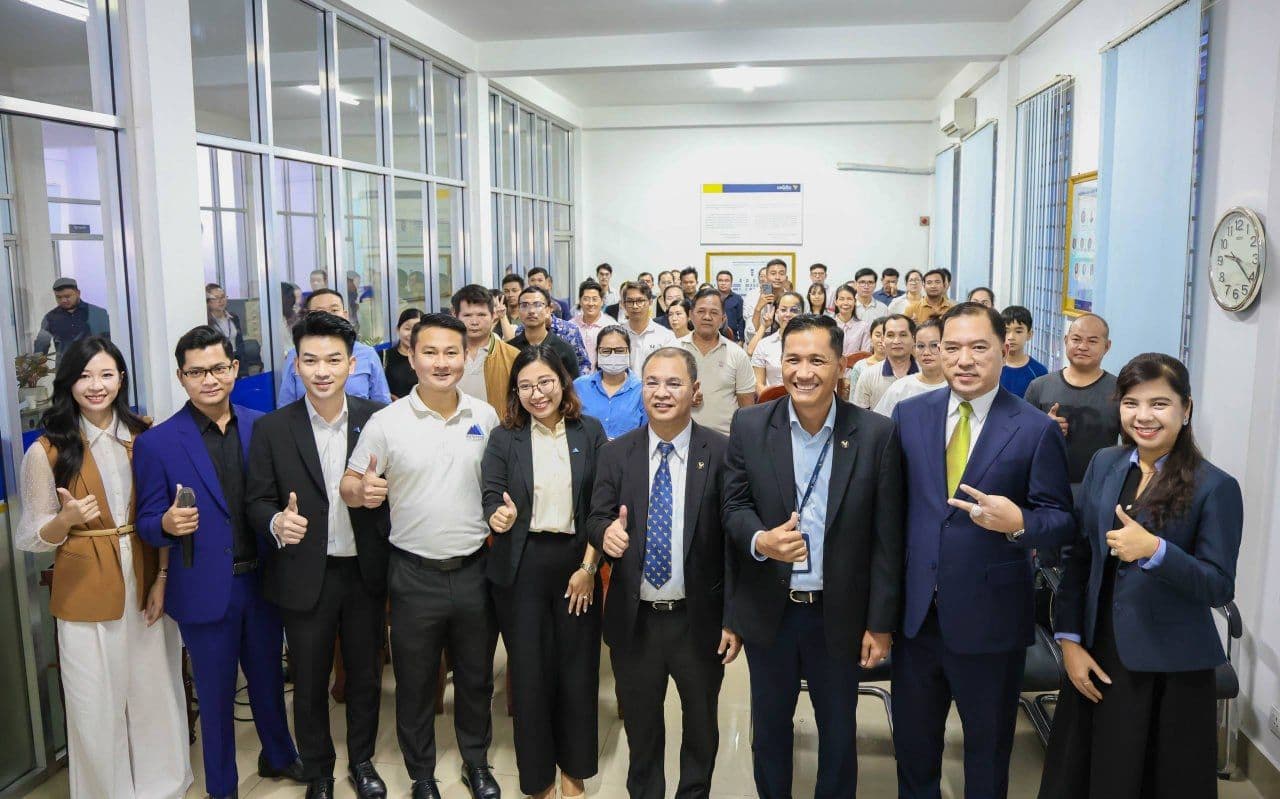
Banjaran Asset Management (Cambodia) Plc. in collaboration with ACLEDA Securities Plc. and the ACLEDA Bank Plc. Local Branch (Khan Chbar Ampov – Sangkat Chbar Ampov Ti Muoy), successfully hosted the Workshop on “Golden Securities Investment Opportunities” as part of the 3rd Round Roadshow. The workshop was held at the meeting hall of ACLEDA Bank Plc. Local Branch (Khan Chbar Ampov – Sangkat Chbar Ampov Ti Muoy) on the morning of 12 September 2026. The workshop aimed to enhance public understanding of capital market investments and the BAMC Asia Equity Fund (BAEF), a Collective Investment Scheme (CIS). We sincerely appreciate the support of our partners and the active participation of all attendees. Special thanks to Mr. Sok Chantola, Deputy Sales & Marketing Manager of Banjaran Asset Management (Cambodia) Plc. on the topic “BAMC Asia Equity Fund (BAEF)”. We look forward to welcoming you to our upcoming events. #BanjaranAMC #BAEF #CIS #Investment #Strategic #Financial

1 分钟阅读阅读更多
Banjaran AMC Brings BAEF Investment Opportunities to Investors in Phnom Penh Through 3rd Round Roadshow
路演2026年9月5日

Banjaran AMC Brings BAEF Investment Opportunities to Investors in Phnom Penh Through 3rd Round Roadshow

Banjaran Asset Management (Cambodia) Plc. in collaboration with ACLEDA Securities Plc. and ACLEDA Bank Plc. Local Branch, (Khan Mean Chey, Sangkat Boeng Tumpun 01), successfully hosted the Workshop on “Golden Securities Investment by Opportunities” as part of the 3rd Round Roadshow. The workshop was held at the meeting hall of ACLEDA Bank Plc. Local Branch, (Khan Mean Chey, Sangkat Boeng Tumpun 01) on the morning of 05 September 2026. The workshop aimed to enhance public understanding of capital market investments and the BAMC Asia Equity Fund (BAEF), a Collective Investment Scheme (CIS). We sincerely appreciate the support of our partners and the active participation of all attendees. Special thanks to Mr. Sok Chantola, Deputy Sales & Marketing Manager of Banjaran Asset Management (Cambodia) Plc. on the topic “BAMC Asia Equity Fund (BAEF)”. We look forward to welcoming you to our upcoming events. #BanjaranAMC #BAEF #CIS #Investment #Strategic #Financial

1 分钟阅读阅读更多