


Phone
Email
Address
:
:
:

English
English - English
Khmer - ខ្មែរ
Chinese - 中文
English - English
Khmer - ខ្មែរ
Chinese - 中文


Since May, markets have continued to operate in an environment marked by policy uncertainty and rising geopolitical risks. The Trump administration’s 90-day pause on “Liberation Day Tariffs” offered temporary relief, but limited progress in broader trade talks - especially with the EU and Japan - has kept investors cautious. While a limited agreement with the U.K. was reached, the overall trade landscape remains unresolved, affecting sentiment and weighing on risk appetite.
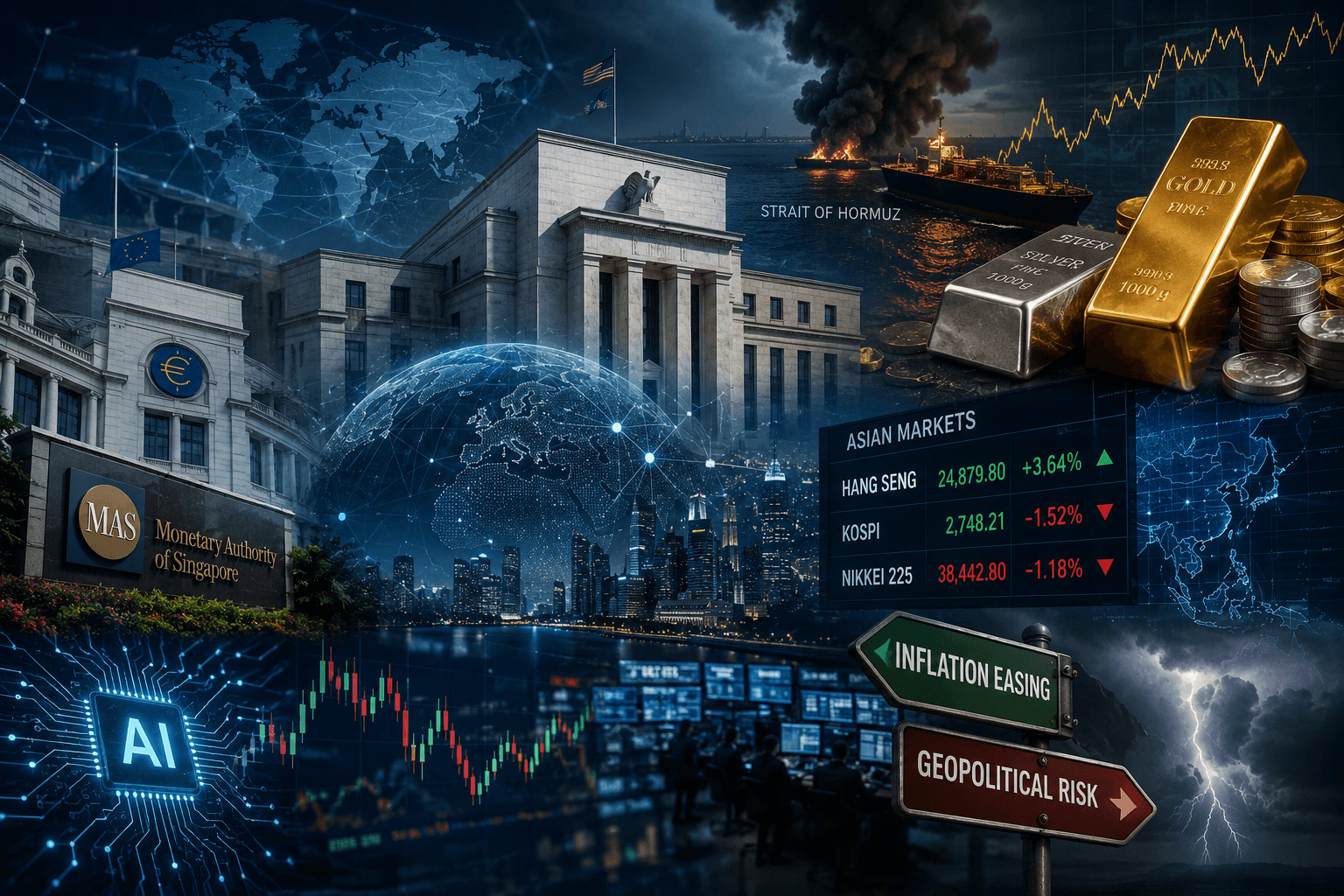
Geopolitical tensions escalated in June, particularly with the Israel-Iran conflict. Iran’s threat to close the Strait of Hormuz - a key route for around 20% of global oil supply - triggered a sharp rise in oil prices. This has increased concerns about supply disruptions, global shipping rerouting, and broader instability in the region. The timing of this conflict has added complexity to the inflation outlook. Central banks, including the Fed, were preparing for a potential shift toward easing. However, the surge in oil prices has introduced new uncertainty. In its June meeting, the Fed held rates steady and signaled only one possible cut for the rest of the year, citing persistent services inflation and elevated geopolitical risks. A prolonged conflict could keep oil prices elevated, which may delay or limit policy easing. Concerns over U.S. fiscal stability, driven by political gridlock and unresolved budget discussions, have added to the uncertainty.
Despite these challenges, we maintain a cautiously optimistic outlook. Disinflationary trends are taking hold, and market volatility has stayed relatively contained. With a potential easing in tariff tensions, expectations of reduced geopolitical friction, and supportive fiscal and probusiness policies in China and the U.S., global equities are expected to continue recovery. Against this backdrop, we maintain a disciplined and balanced approach, guided by bottom-up fundamental analysis in our portfolio construction.
Related Market Outlooks

2026 August Market Outlook: Navigating Volatility
Concerns around the durability of AI-related capital expenditure and intensifying competition triggered a sharp sector sell-off after a mid-July peak. Investor sentiment turned more discerning on the back of earnings season, and questions arose regarding how sustainable the AI investment pace is without eating into cash generation. Capital rotated out of semiconductors and into energy, financials and value stocks, shifting to markets and names seen as less exposed to a single-theme correction.

2026 July Market Outlook: Navigating Crosscurrents
Central banks broadly maintained a data-dependent stance through the period and remained watchful even as global energy-driven inflation eased. The Federal Reserve reaffirmed its commitment to price stability even as growth prospects softened, while the European Central Bank similarly balanced improving headline inflation against still-elevated services prices.

2026 June Market Outlook: From AI-Led Momentum to Persistent Uncertainty—A Disciplined Path Forward
Stronger than expected inflation in the US led newly installed Fed Chair Kevin Warsh to reinforce expectations that any rate cut is more likely in late 2026 or into 2027. Despite this hawkish view, US equities pushed to fresh highs, led by technology stocks. This period also saw Space Exploration Technologies Corp.’s (“SpaceX”) record-setting initial public offering, becoming a focal point for risk appetite and growth sentiment, which further amplified market enthusiasm. In the near term, the success of the SpaceX listing is likely to add further liquidity into space, artificial intelligence (“AI”) infrastructure and adjacent sectors.

2026 May Market Outlook: From Record Highs to Rising Uncertainty—A Selective Path Forward
With inflation still elevated and growth looking uneven across regions, central banks are balancing financial stability and energy-driven price pressures. Expectations for rate cuts have been pushed out or replaced by further tightening of monetary policy. The new Federal Reserve Chair, Kevin Warsh, known to favour rate cuts, faces inflationary pressures in the US economy that work against the dovish narrative, making rate cuts unlikely. Other central banks, such as the Bank of Japan and the European Central Bank have kept its policy unchanged, but with upward revisions to inflation forecasts, investors expect rate hikes this year.

2026 April Market Outlook: From Conflict Shock to Market Strength — What’s Driving the Recovery
Major indices across the countries tumbled in March but abruptly spiked in April upon the announcement of US-Iran peace talks, though the US Navy continues its blockade of the Strait of Hormuz. Record highs in the tech-heavy S&P 500 and strong US corporate earnings reaffirm the market’s resilience throughout the conflict, particularly for demand in technology.

2026 March Market Outlook: Markets Under Pressure as Geopolitical Tensions Rise
The US-Israel war with Iran has created a delicate balancing act between investing for resilient growth and managing geopolitical volatility. While a "soft landing" remains the baseline for many advanced economies, the landscape has grown more complex following the late-February shocks.On interest rate watch, the US Fed is expected to maintain a "higher-for-longer" stance to counter inflationary pressures from rising energy cost, and to a lesser extent the new 15% global tariffs. Markets are pricing in a sustained "war premium" in energy. With Brent crude hovering near $100, any further escalation in the Middle East could reignite global supply-side inflation, which may lead to extended high-interest-rate environment and hence leading to a sharp global economic slowdown.