Insights
Article2 January 20246 min read

Investment Education Series related to Collective Investment Scheme (Part Three)

Investment Education Series related to Collective Investment Scheme (Part Three)

The Investment in Collective Investment Scheme
In part two of the Investment Education Series, we discussed the needs and merits of investing as well as the benefits of investment diversification. The article concluded that an investment fund, or Collective Investment Scheme fund offers the best option for individuals to invest and grow their wealth steadily over time. A fund also helps to lower investment risk through diversification, all while keeping investing affordable to the public.

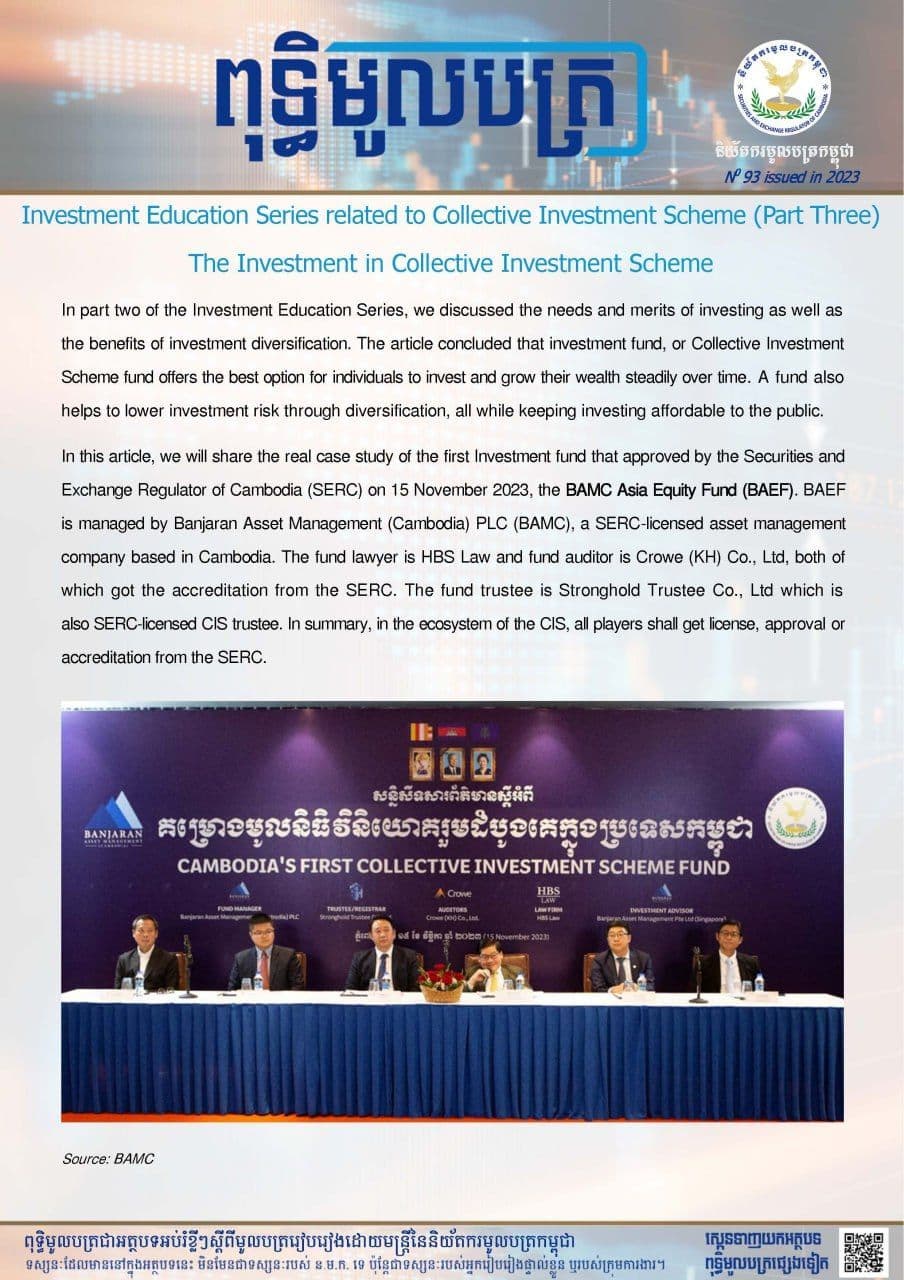
In this article, we will share the real case study of the first Investment fund that was approved by the Securities and Exchange Regulator of Cambodia (SERC) on 15 November 2023, the BAMC Asia Equity Fund (BAEF). BAEF is managed by Banjaran Asset Management (Cambodia) PLC (BAMC), a SERC-licensed asset management company based in Cambodia. The fund lawyer is HBS Law and the fund auditor is Crowe (KH) Co., Ltd, both of which got the accreditation from the SERC. The fund trustee is Stronghold Trustee Co., Ltd which is also a SERC-licensed CIS trustee. In summary, in the ecosystem of the CIS, all players shall get a license, approval, or accreditation from the SERC.

Press Conference 1st KH CIS 08

About BAMC Asia Equity Fund
BAEF is a fund investing in a diversified portfolio of 30 or more companies listed on major stock exchanges across Asia Pacific Ex-Japan. The fund targets to provide the benefits of investing in Asia, which economists globally see as the premier growth region in the coming years. The fund’s tagline is “The Rise of Asia”. According to the disclosure documents, BAEF targets a return of 7% to 10% per annum over the medium to long term, yet this return is not guaranteed. The investment in fund is considered as a form of a regular savings plan. The invested amount can eventually be used for children's education, healthcare, to part fund the purchase of a house, or for retirement. To invest in the fund, the investor shall obtain an investor ID from the SERC first. However, for those who already have the investor ID, they do not need to re-apply for the investor ID.

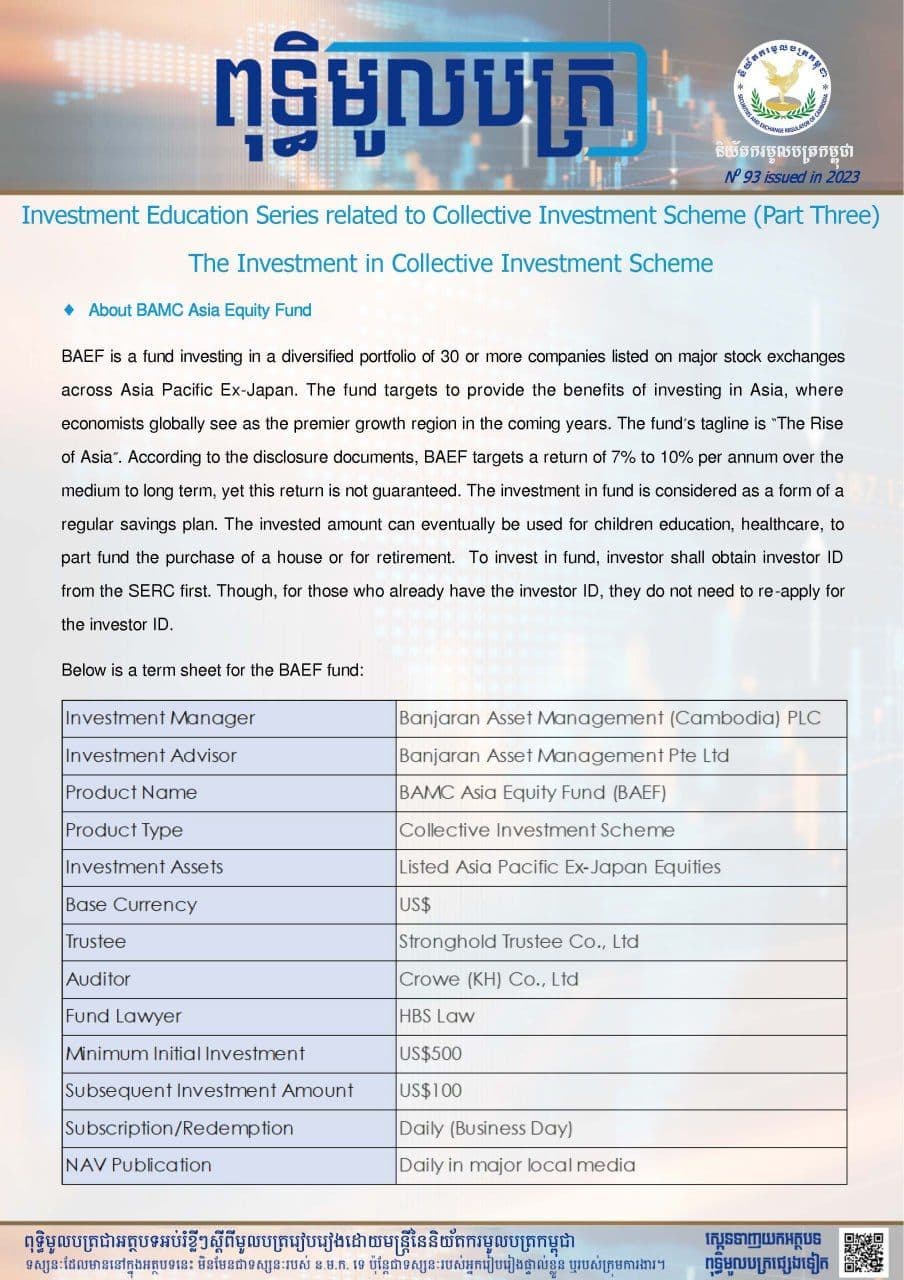
Below is a term sheet for the BAEF fund:

BAEF

Key Consideration Before Making Investment Decision
Generally, fund managers make investments using basic approaches like the top-down approach and bottom-up approach. A top-down approach is when the fund manager looks at macro factors such as, economic cycles, inflation, interest rates, global trends, etc. The bottom-up approach is when the fund manager looks at the features of the individual securities that they invest in such as, the balance sheet, profit and loss statement, management, products, and services, etc. The BAEF adopts both approaches in making their investments.

Bottom-up Approach: Sustainable Growth in the Long-term
The fund manager will select companies that have proven sustainable business models and have proven track records. The fund manager will look at audited financial statements, valuation, and quality of management amongst other things.

Top-down Approach: Why Invest in Asia?

  1. Stable Productive Population in the coming 10 to 20 years
    Asia has a large population base and a favorable demographics. It has a large segment of the younger population which will translate to a stable productive workforce over the next 10 to 20 years. This will result in higher income and higher consumption. These factors will help to drive the region’s economy and its businesses to grow. Relative to poor demographics from regions like the US and Europe, Asia is preferred.
  2. Strong Economic Growth
    In terms of economic growth, Asia is also growing faster and is bigger than the EU and North America. According to an IMF report dated Oct 2023, real GDP growth in 2023 is highest in Asia Pacific at 4.4% vs EU at 1% and North America at 2.1%. As % a share of the total world’s GDP, Asia Pacific share is 45.6%, the EU at 21.0% and North America at 18.7%.
  3. Benefits from the World’s Largest Free-Trade Agreement and Pro-Business Governments Asia’s economic growth will be further enhanced after 15 Asian countries recently signed a free-trade agreement known as the Regional Comprehensive Economic Partnership (RCEP), which will be the
    world’s largest free-trading bloc. The free-trade agreement should enhance trading activities and thus further drive GDP growth as a result. In its forecast, IMF projected Asia to remain as the strongest GDP growth region in 2028 at 3.9% vs EU at 1.6% and North America at 2.1%. 
    Investment Education Series related to Collective Investment Scheme (Part Three)
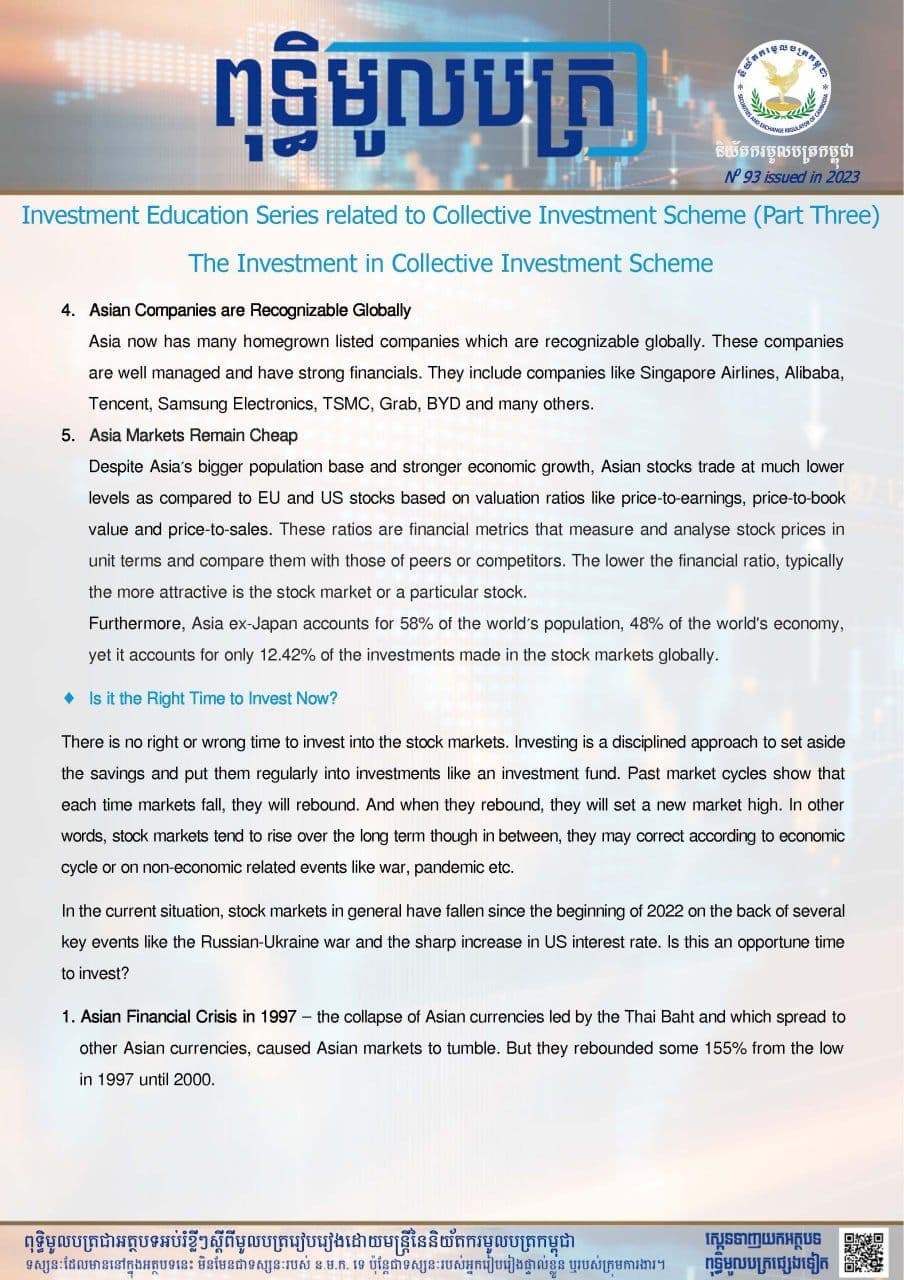
  4. Asian Companies are Recognizable Globally
    Asia now has many homegrown listed companies which are recognizable globally. These companies are well-managed and have strong financials. They include companies like Singapore Airlines, Alibaba, Tencent, Samsung Electronics, TSMC, Grab, BYD and many others.
  5. Asia Markets Remain Cheap
    Despite Asia’s bigger population base and stronger economic growth, Asian stocks trade at much lower levels as compared to EU and US stocks based on valuation ratios like price-to-earnings, price-to-book value, and price-to-sales. These ratios are financial metrics that measure and analyze stock prices in unit terms and compare them with those of peers or competitors. The lower the financial ratio, typically the more attractive is the stock market or a particular stock.

    Furthermore, Asia ex-Japan accounts for 58% of the world’s population, and 48% of the world's economy, yet it accounts for only 12.42% of the investments made in the stock markets globally. BAMC views that the under-representation of Asian stock investments will have to be adjusted upwards eventually.

Is it the Right Time to Invest Now?
There is no right or wrong time to invest in the stock markets. Investing is a disciplined approach to set aside the savings and put them regularly into investments like an investment fund. Past market cycles show that each time markets fall, they will rebound. And when they rebound, they will set a new market high. In other words, stock markets tend to rise over the long term though in between, they may correct according to economic
cycle or on non-economic-related events like war, pandemic, etc.

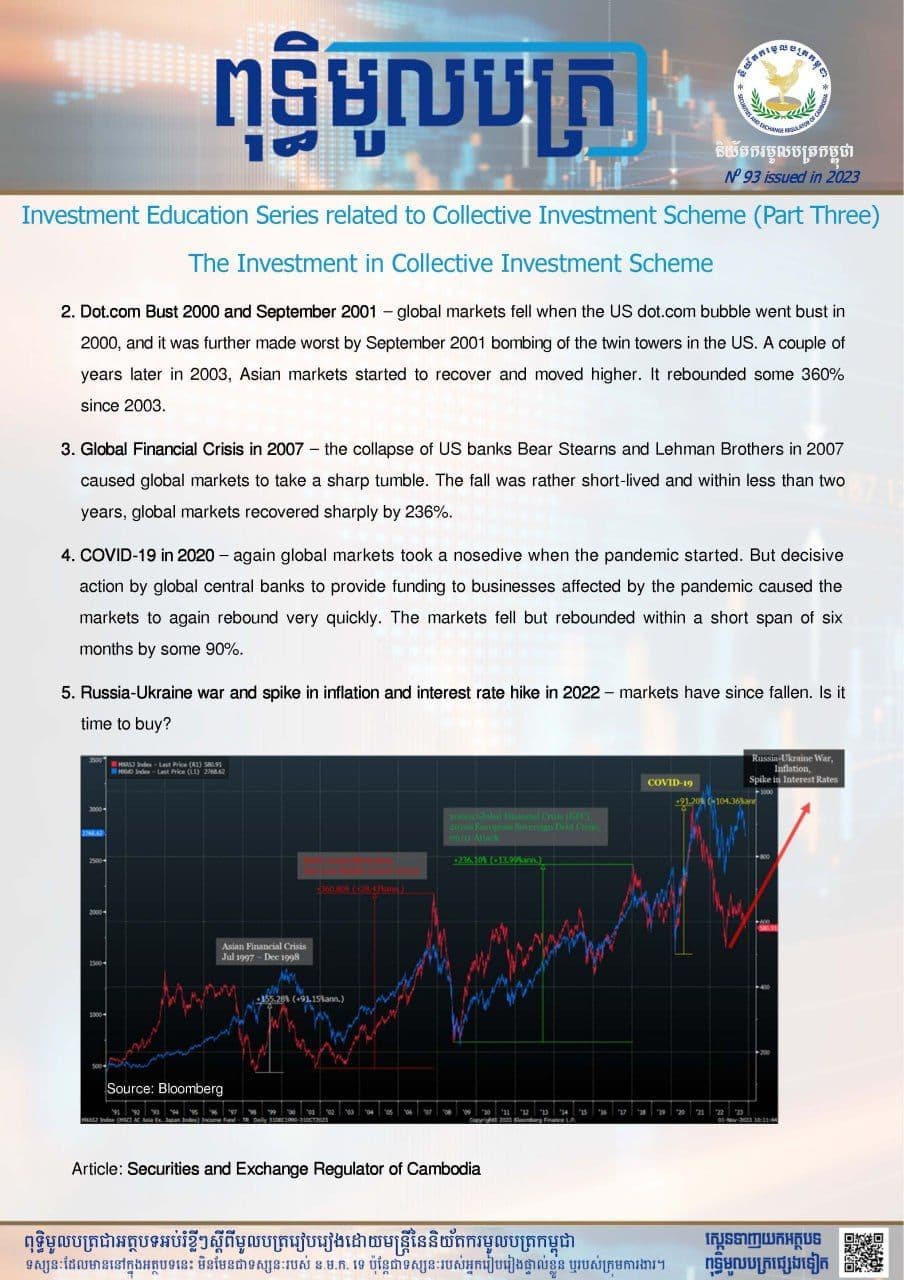
In the current situation, stock markets in general have fallen since the beginning of 2022 on the back of several key events like the Russian-Ukraine war and the sharp increase in US interest rate. Is this an opportune time to invest? BAMC has analyzed the past market cycles and noted that after each significant event that had caused stocks to fall, they had rebounded sharply after riding out that event:

  1. Asian Financial Crisis in 1997 – the collapse of Asian currencies led by the Thai Baht and which spread to other Asian currencies, caused Asian markets to tumble. But they rebounded some 155% from the low
    in 1997 until 2000.
  2. Dot.com Bust 2000 and September 2001 – global markets fell when the US dot.com bubble went bust in 2000, and it was further made worse by the September 2001 bombing of the Twin Towers in the US. A couple of years later in 2003, Asian markets started to recover and moved higher. It rebounded some 360% since 2003.
  3. Global Financial Crisis in 2007 – the collapse of US banks Bear Stearns and Lehman Brothers in 2007 caused global markets to take a sharp tumble. The fall was rather short-lived and within less than two years, global markets recovered sharply by 236%.
  4. COVID-19 in 2020 – again global markets took a nosedive when the pandemic started. However decisive action by global central banks to provide funding to businesses affected by the pandemic caused the markets to again rebound very quickly. The markets fell but rebounded within a short span of six months by some 90%.
  5. Russia-Ukraine war and spike in inflation and interest rate hike in 2022 – markets have since fallen. Is it time to buy?
graft

An article from the Securities & Exchange Regulator of Cambodia (SERC)
Share

More insights

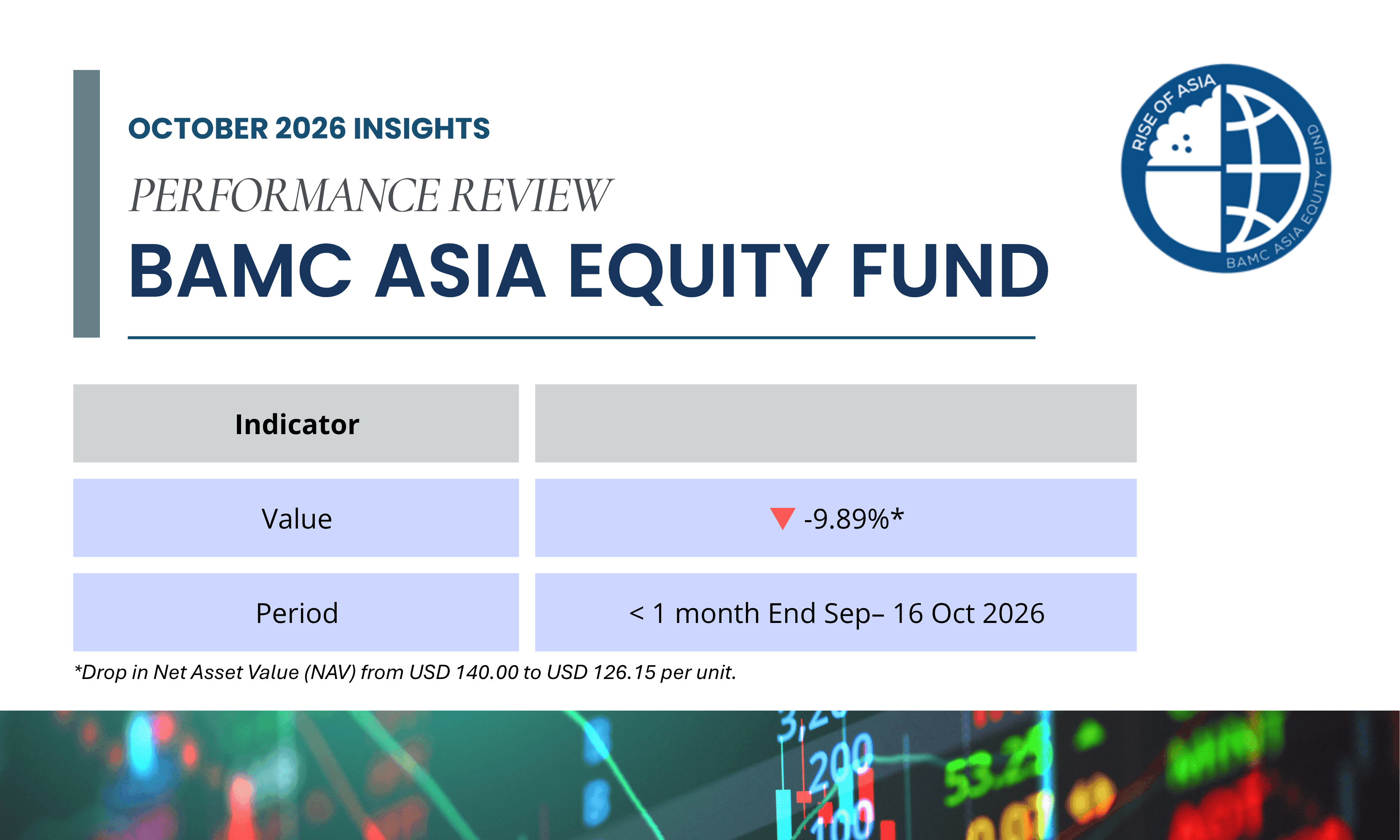
BAMC Asia Equity Fund (BAEF) Performance as of 16 October 2026
Announcement23 October 2026

BAMC Asia Equity Fund (BAEF) Performance as of 16 October 2026

Markets in October Since end September, global equities have faced pressure from higher borrowing costs and growing scrutiny of the returns from AI related spending. Stronger than expected US inflation reinforced expectations of further Federal Reserve tightening, weighing particularly on technology and semiconductor valuations. Elevated oil prices added further pressure on inflation concerns. Overall, technology-heavy Asian markets bore a greater share of the selling in October’s global tech weakness. Our exposure to Asian equities reflects our focus on the region’s long-term growth opportunities. Short-term volatility is an inherent risk of this approach, but our investment decisions remain anchored in companies’ fundamentals and their potential to generate sustainable returns over time. Portfolio underperformance Against this backdrop, BAEF’s main drag was its concentration in Korean and Taiwanese equities and semiconductor related holdings, which together accounted for 32.3% of the portfolio and approximately 4% of the calculated drag. The Korea ETF and Samsung alone contributed roughly 2%. Korea was particularly affected by the unwinding of AI-related positions. On 15 October, its benchmark equity index fell approximately 8%. Samsung’s weakness came despite guidance for a substantial increase in third-quarter operating profit, suggesting that concerns over valuations, financing conditions and competition outweighed the near-term earnings improvement. The drop was compounded by sharp falls in several Singapore small caps and financials. Addvalue fell 22.9%, UOB Kay-Hian 25.2%, OCBC 10.3%. OCBC faced a specific catalyst when Citi downgraded the stock from “neutral” to “sell”, citing risks to third-quarter earnings, pressure on net interest margins from higher deposit costs, and the potential normalisation of exceptionally strong first-half wealth-related income. Addvalue’s share price weakness is due to profit-taking after a strong run. Singapore’s semiconductor-related suppliers to chipmakers fell harder than the larger chipmakers; Frencken fell 14.9%, UMS 14.8% and AEM 9.9%. Together, these holdings constituted approximately 14% of the portfolio and implied another 2.3% of drag. Like the global technology sell-off, broader concerns over the AI investment cycle were weighing on sentiment beyond individual companies’ reported performance. There were few meaningful offsets in the portfolio as gains elsewhere were insufficient to counter the losses. Why we still hold these stocks Despite the recent weakness, we retain these holdings because the underlying earnings drivers remain relevant to our investment horizon. The sell-off has weakened share prices more than the underlying medium- to long-term investment case. In semiconductors, the correction has coincided with continued growth in demand for AI compute. TSMC’s latest results and guidance pointed to sustained demand for advanced chips, while Samsung’s earnings guidance reflected stronger memory sales and pricing. These developments support maintaining exposure to the sector, although we recognise that strong operating performance does not eliminate valuation risk or the possibility of further share price volatility. Our Singapore semiconductor holdings provide exposure to different parts of this investment cycle. UMS benefits from equipment demand and increasing exposure to advanced packaging, AEM offers participation in increasingly complex semiconductor testing, and Frencken provides a more diversified manufacturing exposure. The rationale for retaining these positions rests on their prospective earnings as customers invest in additional capacity and advanced chip architectures, rather than an expectation that all semiconductor-related stocks will recover together. For the financial holdings, recent operating results provide a basis for distinguishing share price weakness from deterioration in the businesses. OCBC’s wealth-management and other non-interest income have helped offset pressure on lending margins, while its capital position continues to support business growth and distributions. UOB Kay Hian reported substantially higher first-half earnings, supported by stronger trading activity, commission income and interest income. We retain exposure to these earnings streams, while recognising that wealth related revenue and brokerage activity are market sensitive and that recent growth rates may not persist. We retain exposure to Addvalue to the long-term growth in satellite connectivity and space infrastructure. Recent share-price weakness appears to reflect, in part, profit-taking following a strong rally, while continued orders support the underlying growth outlook. In september, Addvalue announced US$15 million of new orders across its space connectivity and advanced digital radio business, bringing its order book to US$20.2 million. Converting these orders into earnings and cash flow remains central to our investment case. Overall, we remain selective and view the decline as a potential opportunity to top up positions rather as a reason to hold every position unchanged. Continued ownership must be supported by company fundamentals, an acceptable valuation, and grounded in earnings growth. Moving forward Looking ahead, we intend to increase exposure to quality large-cap and blue-chip companies to strengthen portfolio resilience amid continued volatility. We will prioritise businesses with sound balance sheets, sustainable earnings and cash flows, and durable competitive advantages. Further market weakness could provide opportunities to build positions at more attractive entry prices, while maintaining a disciplined approach to valuation. Disclaimer : This Document is issued for information and investor awareness purposes only to explain the factors contributing to the changes in BAEF’s NAV. It does not constitute investment advice, an investment recommendation, an offer, or a solicitation to buy, sell, or hold units of BAEF. The information provided herein should not be relied upon as the sole basis for any investment decision and does not guarantee future performance. Investors should refer to the Fund’s official offering documents and disclosures and carefully assess their own investment objectives and risk tolerance before making any investment decision.

4 min readRead more
2026 September Market Outlook: Navigating Market Divergence
Market Outlook1 October 2026

2026 September Market Outlook: Navigating Market Divergence

The Fed maintained a restrictive, data-dependent stance through August and subsequently raised the federal funds target range by 25 basis points to 3.75-4.00% citing persistent inflationary pressures. Updated projections point to the possibility of one further increase in 2026. Elevated long-dated US Treasury yields continue to present a valuation risk particularly for growth, technology and AI-related companies, whose expected cash flows lie further in the future. At the same time, continued corporate earnings delivery and investments in strategic technologies along the tech supply chain have so far helped the global economy absorb tighter financial conditions. Strong earnings guidance from major global technology companies supports the view that investment in data centres, advanced chips and supporting infrastructure remains resilient. Within Asia, performance has diverged meaningfully across countries. Singapore remains the region’s defensible market, with strong banking profitability and wealth management inflows attracting investor interest amid global uncertainty. Taiwan and South Korea’s technology sector continues to be major beneficiaries of surging AI-related demand. On the other hand, confidence towards China’s and Indonesia’s growth outlook remains fragile. China’s slow economic momentum is a result of a weak property market and slow domestic consumption, while Indonesia’s commodity price normalisation and concerns over capital outflows weigh on sentiment. Against this backdrop, maintaining well-diversified exposure across geographies and themes remains important. We continue to be highly selective in stock selection, adhering to a disciplined, bottom-up approach to portfolio construction that prioritises quality and resilience to macroeconomic uncertainty.

1 min readRead more
Banjaran AMC Brings BAEF Investment Opportunities to Investors in Phnom Penh Through 3rd Round Roadshow
Roadshow5 September 2026

Banjaran AMC Brings BAEF Investment Opportunities to Investors in Phnom Penh Through 3rd Round Roadshow

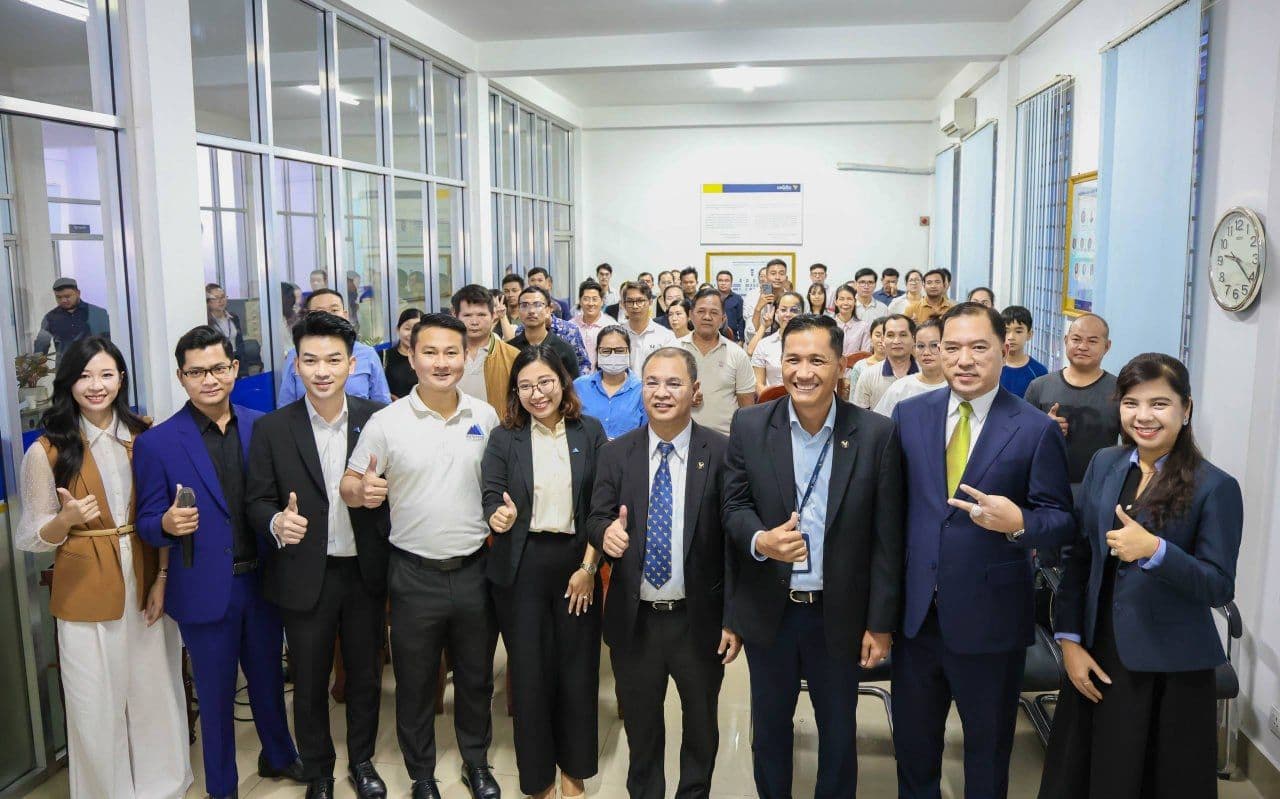
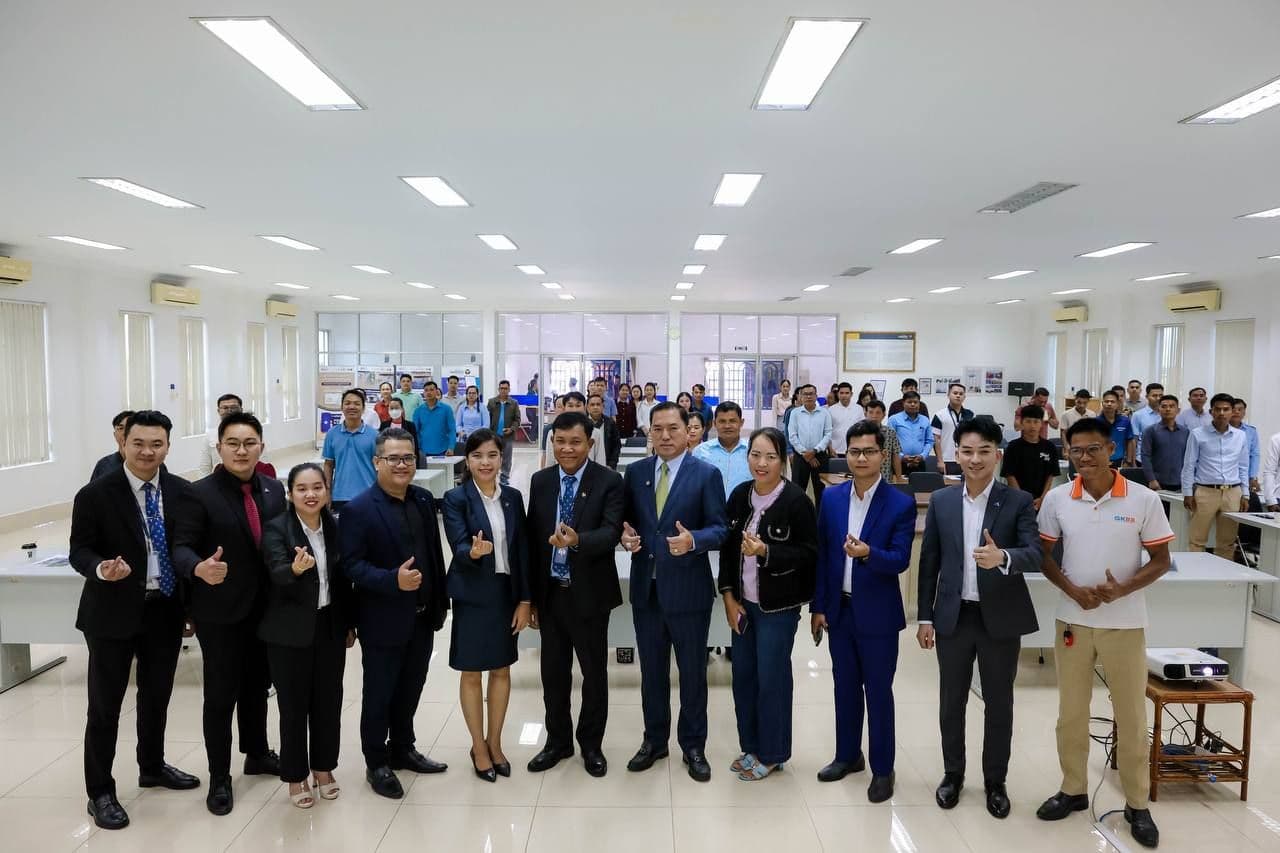
Banjaran Asset Management (Cambodia) Plc. in collaboration with ACLEDA Securities Plc. and ACLEDA Bank Plc. Local Branch, (Khan Mean Chey, Sangkat Boeng Tumpun 01), successfully hosted the Workshop on “Golden Securities Investment by Opportunities” as part of the 3rd Round Roadshow. The workshop was held at the meeting hall of ACLEDA Bank Plc. Local Branch, (Khan Mean Chey, Sangkat Boeng Tumpun 01) on the morning of 05 September 2026. The workshop aimed to enhance public understanding of capital market investments and the BAMC Asia Equity Fund (BAEF), a Collective Investment Scheme (CIS). We sincerely appreciate the support of our partners and the active participation of all attendees. Special thanks to Mr. Sok Chantola, Deputy Sales & Marketing Manager of Banjaran Asset Management (Cambodia) Plc. on the topic “BAMC Asia Equity Fund (BAEF)”. We look forward to welcoming you to our upcoming events. #BanjaranAMC #BAEF #CIS #Investment #Strategic #Financial

1 min readRead more
2026 August Market Outlook: Navigating Volatility
Market Outlook1 September 2026

2026 August Market Outlook: Navigating Volatility

Concerns around the durability of AI-related capital expenditure and intensifying competition triggered a sharp sector sell-off after a mid-July peak. Investor sentiment turned more discerning on the back of earnings season, and questions arose regarding how sustainable the AI investment pace is without eating into cash generation. Capital rotated out of semiconductors and into energy, financials and value stocks, shifting to markets and names seen as less exposed to a single-theme correction. Layered on top was renewed Middle East escalation and its effect on rates expectations. Brent crude spiked back above $100/barrel intermittently after the US reinstated a naval blockade on Iran and announced plans to impose a levy on cargo transiting Hormuz, although the levy was never implemented. This revived inflation concerns and caused markets to price a reduced likelihood of further Fed easing. Elevated US bond yields further weighed on stocks. Looking ahead, renewed conflict or another AI-related pullback could swiftly unwind recent sentiment gains and force a repricing of both rates and earnings expectations. Against this backdrop, we continue to favour a diversified, bottom-up approach that balances exposure to structural AI and technology themes with quality, less crowded names to weather through volatility.

1 min readRead more
Banjaran AMC Expands Securities Investment Awareness Through 3rd Round Roadshow in Svay Rieng
Roadshow22 August 2026

Banjaran AMC Expands Securities Investment Awareness Through 3rd Round Roadshow in Svay Rieng

Banjaran Asset Management (Cambodia) Plc., in collaboration with ACLEDA Securities Plc., and ACLEDA Bank Plc. Local Branch (Svay Rieng Province), successfully hosted the Workshop on “Golden Securities Investment by Opportunities” as part of the 3rd Round Roadshow. The workshop was held at the meeting hall of ACLEDA Bank Plc. Local Branch (Svay Rieng Province) on the morning of 22 August 2026. The workshop aimed to enhance public understanding of capital market investments and the BAMC Asia Equity Fund (BAEF), a Collective Investment Scheme (CIS). We sincerely appreciate the support of our partners and the active participation of all attendees. Special thanks to Mr. Taing Hoy, Legal and Compliance Officer of Banjaran Asset Management (Cambodia) Plc., on the topic “Investment Value and Benefits of the BAMC Asia Equity Fund (BAEF)”. We look forward to welcoming you to our upcoming events. #BanjaranAMC #BAEF #CIS #Investment #Strategic #Financial

1 min readRead more
Banjaran AMC Strengthens Strategic Partnership with Forte Through BAEF Investment Workshop
Event19 August 2026

Banjaran AMC Strengthens Strategic Partnership with Forte Through BAEF Investment Workshop

Banjaran Asset Management (Cambodia) Plc., in collaboration with ACLEDA Securities Plc., successfully organized a workshop on “Golden Investment Opportunities in Securities Sector” for the Management team and staff of Forte General Insurance Plc., and Forte Life Assurance Plc., on 19 August 2026 at Forte Office, One Park Tower. The workshop provided participants with valuable insights into the BAMC Asia Equity Fund (BAEF), including its key features, investment strategy, and the opportunities available through investing in a professionally managed fund licensed by the Securities and Exchange Regulator of Cambodia (SERC). During the session, Mr. Sok Chantola, Deputy Sales & Marketing Manager of Banjaran Asset Management (Cambodia) Plc., delivered a presentation on “Investment Value and Benefits of the BAMC Asia Equity Fund (BAEF)”, sharing knowledge on investment opportunities and the benefits of BAEF as part of Cambodia’s growing securities sector. This workshop marks another important milestone under the Strategic Partnership between Banjaran Asset Management (Cambodia) Plc., ACLEDA Securities Plc., Forte General Insurance Plc., and Forte Life Assurance Plc., with the aim of enhancing investment awareness, strengthening collaboration, and creating opportunities for future business growth. #BanjaranAMC #BAEF #CIS #Investment #Strategic #Financial

1 min readRead more