

全球股市持续刷新高点,主要由半导体板块的强劲表现所推动。这种高度集中的上涨趋势显示投资者正将重注押在少数行业上,某种程度上反映出市场对整体经济前景仍存谨慎。尽管半导体板块的增长令人瞩目,但这种单一板块驱动的行情也更易受到市场情绪变化的冲击,因此投资者仍需保持警惕。
在宏观层面,美国联邦储备局 (“美联储”) 保持谨慎态度,暂未释放明确的降息信号。受强劲就业数据和持续高企的通胀推动,美联储表示需要观察更多数据再做决策。尽管企业与消费者表现相对稳健,让许多分析师延后了对经济衰退的预测,但劳动力市场已出现放缓迹象,美国失业率自2023年低点的3.4%逐步上升至4%。这可能是更广泛经济疲软的前兆,与我们认为美联储今年仍可能进行一次降息的观点相一致。
相较之下,中国股市在年初政策提振带动的上涨后出现回调,主要因投资者获利了结。市场目前处于观望状态,等待房地产行业相关政策的进一步明朗。我们维持既有观点:中国的房地产挑战不太可能演变为系统性风险。中国政府已清晰表明其稳楼市的决心,并预计将视情况推出更具针对性的支持措施。
在科技领域,我们对人工智能推动长期生产力提升保持乐观。例如,近期一项研究显示,使用微软 GitHub CoPilot —— 一款人工智能驱动的编码助手 —— 的软件开发人员,任务完成速度比未使用者快 高达 56%。这一显著效率提升凸显了人工智能(AI) 对职场的深远变革潜力。
市场对人工智能的预期仍然极高,超级计算中心(hyperscalers) 的投资预计到 2030 年前将以每年至少 20% 的速度增长。尽管客服、邮件摘要、图像生成等人工智能应用能带来即时节省成本的效果,但我们认为下一轮重大经济跃进将来自向通用人工智能(“AGI”)的演进。
目前的生成式人工智能模型虽然进展迅速,但仍受限于无法有效处理训练数据之外的任务。而 AGI 的发展将有望突破这一限制,使人工智能(AI) 能够以更高准确性和多样性执行更广泛的任务。此外,人工智能在消费端应用仍有限,因为手机硬件的运算能力不足以高效处理大量人工智能 (AI) 任务。但随着人工智能基础设施投资不断加码,技术正快速演进,我们将持续关注企业如何突破创新边界并推动人工智能商业化的投资机会。
综上所述,尽管半导体股主导了 2024 年股市涨势,但由于上涨集中度高,我们认为应保持一定谨慎。美联储在劳动力市场走弱背景下推迟降息,也让市场前景更具复杂性。与此同时,中国房地产行业的政策促进仍在进行,而人工智能的长期潜力令人期待,但其全面变革作用仍需时间。面对这些动态变化的市场格局,我们将继续在不同板块与区域中,谨慎而有选择性地寻找投资机会。
Related Market Outlooks

2026 August Market Outlook: Navigating Volatility
Concerns around the durability of AI-related capital expenditure and intensifying competition triggered a sharp sector sell-off after a mid-July peak. Investor sentiment turned more discerning on the back of earnings season, and questions arose regarding how sustainable the AI investment pace is without eating into cash generation. Capital rotated out of semiconductors and into energy, financials and value stocks, shifting to markets and names seen as less exposed to a single-theme correction.

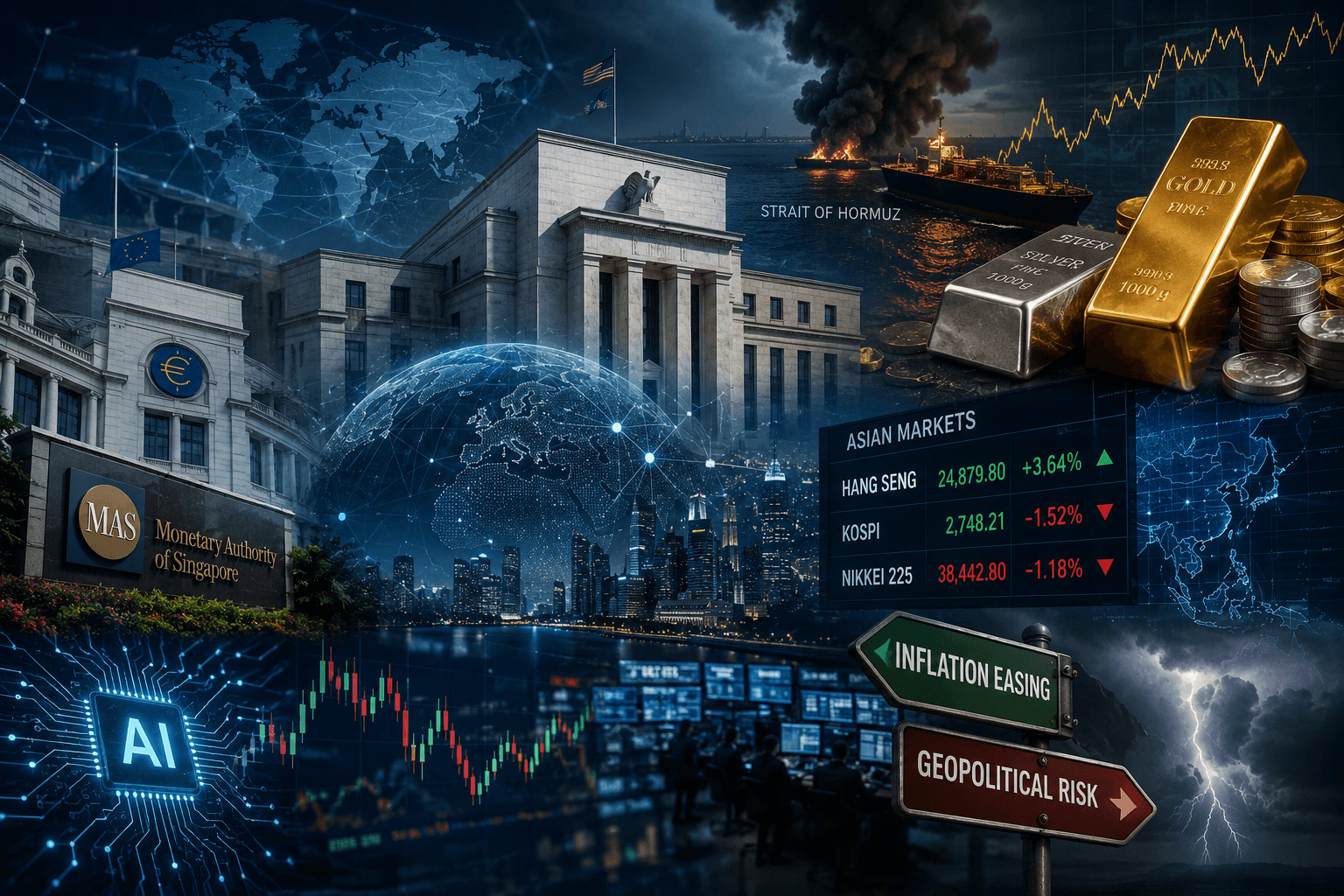
2026 July Market Outlook: Navigating Crosscurrents
Central banks broadly maintained a data-dependent stance through the period and remained watchful even as global energy-driven inflation eased. The Federal Reserve reaffirmed its commitment to price stability even as growth prospects softened, while the European Central Bank similarly balanced improving headline inflation against still-elevated services prices.

2026 June Market Outlook: From AI-Led Momentum to Persistent Uncertainty—A Disciplined Path Forward
Stronger than expected inflation in the US led newly installed Fed Chair Kevin Warsh to reinforce expectations that any rate cut is more likely in late 2026 or into 2027. Despite this hawkish view, US equities pushed to fresh highs, led by technology stocks. This period also saw Space Exploration Technologies Corp.’s (“SpaceX”) record-setting initial public offering, becoming a focal point for risk appetite and growth sentiment, which further amplified market enthusiasm. In the near term, the success of the SpaceX listing is likely to add further liquidity into space, artificial intelligence (“AI”) infrastructure and adjacent sectors.

2026 May Market Outlook: From Record Highs to Rising Uncertainty—A Selective Path Forward
With inflation still elevated and growth looking uneven across regions, central banks are balancing financial stability and energy-driven price pressures. Expectations for rate cuts have been pushed out or replaced by further tightening of monetary policy. The new Federal Reserve Chair, Kevin Warsh, known to favour rate cuts, faces inflationary pressures in the US economy that work against the dovish narrative, making rate cuts unlikely. Other central banks, such as the Bank of Japan and the European Central Bank have kept its policy unchanged, but with upward revisions to inflation forecasts, investors expect rate hikes this year.

2026 April Market Outlook: From Conflict Shock to Market Strength — What’s Driving the Recovery
Major indices across the countries tumbled in March but abruptly spiked in April upon the announcement of US-Iran peace talks, though the US Navy continues its blockade of the Strait of Hormuz. Record highs in the tech-heavy S&P 500 and strong US corporate earnings reaffirm the market’s resilience throughout the conflict, particularly for demand in technology.

2026 March Market Outlook: Markets Under Pressure as Geopolitical Tensions Rise
The US-Israel war with Iran has created a delicate balancing act between investing for resilient growth and managing geopolitical volatility. While a "soft landing" remains the baseline for many advanced economies, the landscape has grown more complex following the late-February shocks.On interest rate watch, the US Fed is expected to maintain a "higher-for-longer" stance to counter inflationary pressures from rising energy cost, and to a lesser extent the new 15% global tariffs. Markets are pricing in a sustained "war premium" in energy. With Brent crude hovering near $100, any further escalation in the Middle East could reignite global supply-side inflation, which may lead to extended high-interest-rate environment and hence leading to a sharp global economic slowdown.


